
Advora.media
Language

Opens Google Translate in a new tab. Automatic translations may contain errors.

Creator Economy/ Insights

Instagram Monetisation in India: Every Option Explained

Compare Instagram income options in India and check account-level eligibility for Gifts, Subscriptions and Creator Marketplace in the Professional Dashboard.

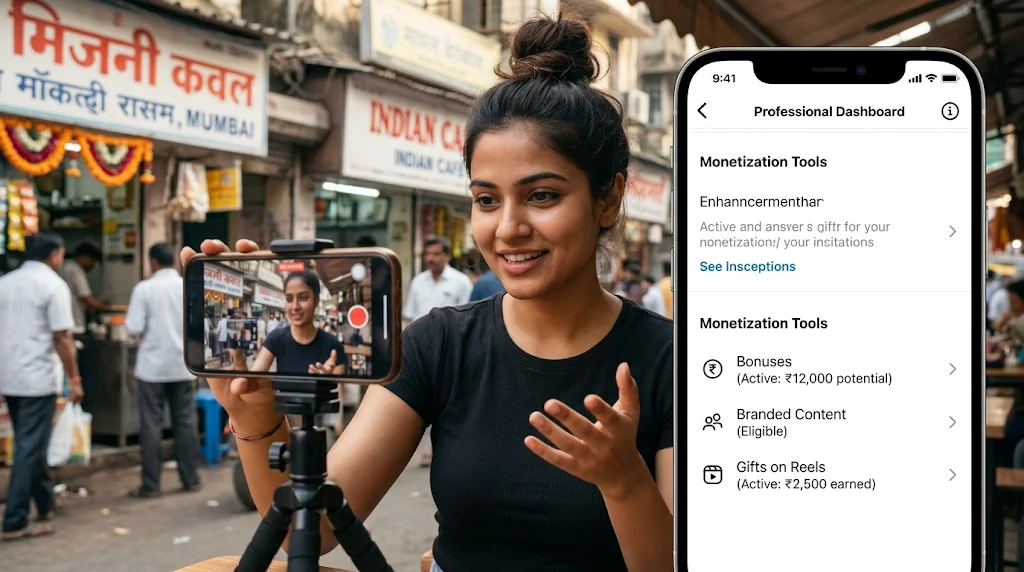
 Creator filming a Reel on a phone with an Instagram professional dashboard on screen, illustrating Instagram monetization in India

Compare Instagram income options in India and check account-level eligibility for Gifts, Subscriptions and Creator Marketplace in the Professional Dashboard.

Key points

  • Check current programme terms before estimating any income from views or audience activity.
  • Confirm tool eligibility in the Professional Dashboard for your account and location.
  • Gifts pay a fixed US0.01perStar,so1lakhStarsequalsaboutUS1,000.
  • Brand deals remain the main income source. Kofluence’s 2026 report found 93.1% of brands prioritise Instagram as their main influencer channel.
  • All Instagram and brand income is taxable in India, and creators above the GST threshold must register and charge GST.

How does Instagram monetisation work in India?

Instagram has several monetisation tools for eligible accounts. Open the Professional Dashboard to see which tools you can set up and what terms apply.

Eligibility depends on the tool, market and account. Use the current requirements in the Professional Dashboard before budgeting for income.

Brand money, affiliate commission and your own products sit outside Instagram’s tools. For most Indian creators, these are where the real income comes from.

Editor’s note: The most common question we hear from creators is “how much does Instagram pay per 1,000 views in India?” The honest answer is nothing. Any rupee-per-view figure you see online usually describes an old bonus programme, another country, or a guess.

How do Instagram Gifts work in India?

Viewers can use Stars to send Gifts on eligible Reels. Check the payout terms available to your account before estimating earnings.

Meta directs creators to the Professional Dashboard to check Gifts eligibility. Check what the dashboard says about your account and location.

Source: Meta, how to check Gifts eligibility

Review the controls for Gifts if the tool appears in your account.

Estimate earnings using the payout terms in your account and the number of Gifts you expect to receive.

What are the Instagram Subscriptions requirements in India?

Subscriptions let followers pay a monthly fee for exclusive content such as subscriber-only Reels, Stories, Lives, posts and broadcast channels. Subscribers get a badge next to their name in your comments and messages.

Check whether Subscriptions is available in your Professional Dashboard. Review the onboarding requirements and payout terms shown for your account.

Use the subscription price options shown in your account when estimating revenue.

Compare the price subscribers pay with the net amount you receive after applicable deductions.

Estimate how many paid members you can serve and the time required to deliver the content you promise.

What are Live badges and Instagram bonuses?

Live badges let viewers buy badges during your Instagram Live, which appear next to their comments. Badges suit creators who go Live regularly and have an engaged audience, and require a professional account and age 18 or above.

Bonuses are invite-only payments for hitting targets, such as a number of Reels plays in a set period. You cannot apply for them; if Instagram invites you, the offer appears in your professional dashboard.

Meta’s original Reels Play bonus scheme paid selected creators heavily when Reels launched, then was wound down through 2022 and 2023. Bonus invitations still appear for some creators, but they are irregular and should never be planned around.

How does the Instagram Creator Marketplace work in India?

The Creator Marketplace lets brands discover creators for paid partnerships, and creators receive brand messages in a dedicated partnership folder. Meta expanded it to India and seven other markets in February 2024.

Meta announced that Creator Marketplace was expanding to India in 2024. Eligible creators can join through their Professional Dashboard.

Source: Meta, Creator Marketplace expansion to India

The marketplace matters most because of partnership ads. These let brands run your content as a paid ad that shows both your handle and theirs, combining signals from both accounts.

In 2025, Meta added AI-based creator recommendations for brands, badges for creators with partnership ads experience, and the ability for brands to see a creator’s live partnership ads. Meta’s India ads head has described India as home to the world’s largest community of Instagram creators.

Editor’s note: For Indian creators, partnership ads are the most underrated earning route. A brand that has run your content as a paid ad has proof it works, which makes repeat deals and usage-rights fees much easier to negotiate.

How much do Indian creators earn from brand deals?

Brand deals are the biggest earning source for Instagram creators in India by a wide margin. India’s influencer marketing market is expected to reach ₹4,500 crore to ₹5,000 crore by the end of 2026, according to Kofluence.

Typical 2026 rates per Instagram Reel, from our influencer rate card for India, are:

  • Nano (1,000 to 10,000 followers): ₹1,000 to ₹12,000
  • Micro (10,000 to 1 lakh): ₹8,000 to ₹80,000
  • Mid-tier (1 lakh to 5 lakh): ₹50,000 to ₹3.5 lakh
  • Macro (5 lakh to 10 lakh): ₹2 lakh to ₹8 lakh
  • Celebrity and mega creators: ₹6 lakh to ₹25 lakh and more

Stories usually cost a quarter to a third of a Reel. Usage rights, exclusivity and partnership ad permissions should be priced separately, because they let a brand use your content well beyond a single post.

Competition for those deals is intense. India has roughly 4 million to 4.4 million active creators, with Instagram the main platform for 3.3 million to 3.7 million of them.

What other ways can you make money on Instagram in India?

Affiliate links. Creators earn commission on sales from links they share, through programmes such as Amazon Associates, Flipkart’s affiliate programme, or brand-specific codes. Instagram’s own affiliate tools are not widely available in India, so most creators use links in Stories, bios and broadcast channels.
Your own products. Courses, ebooks, presets, templates, merchandise and coaching often earn more than sponsorships for creators with a clear niche, because you keep the margin.

Paid communities. Many Indian creators run paid groups on WhatsApp or Telegram and bill through payment platforms, because that is where their audience already spends time.

Services and UGC. Creating content for brands to post on their own accounts, known as user-generated content, pays even if your own following is small.

Events and appearances. Larger creators earn from hosting, speaking and store launches, particularly around festive seasons.

How do Instagram payouts work for Indian creators?

Check the payout method, threshold and schedule for each monetisation tool in your account.

Complete the payout setup for the tools you plan to use and save your payout statements.

Record the amount received after any currency conversion fees when comparing income sources.

What tax and compliance rules apply to Instagram income in India?

All Instagram income, including Gifts, Subscriptions, bonuses, brand fees and affiliate commission, is taxable in India as business or professional income.

GST applies once your annual turnover from services crosses the registration threshold, after which brand deals carry 18% GST. Kofluence’s 2026 report found that about 15% of active Indian creators are now GST-registered.

Barter matters too. Under Section 194R, brands must deduct 10% TDS on free products or benefits worth more than ₹20,000 a year, so gifted products are not tax-free.

Disclosure is mandatory. ASCI guidelines require clear labels such as #ad or #sponsored, and Instagram’s paid partnership label, on all brand content.

How do you increase your Instagram earnings in India?

Set up a professional account and check which monetisation tools appear in its dashboard.

If Creator Marketplace is available, build a portfolio that shows brands which audiences and formats you can serve.

Pick a niche brands pay for. Finance, beauty, tech, food and parenting creators command higher rates than general lifestyle accounts at the same follower count.

Sell results, not reach. Share engagement, saves, link clicks and past campaign outcomes with brands, and learn the metrics they care about, such as ROAS.

Offer partnership ad rights. Brands increasingly want to run creator content as ads on Meta, and the right to do so should carry a fee.

Diversify. Combine brand deals with affiliate links and at least one product of your own, so one algorithm change does not wipe out your income.

What to ignore in Instagram monetisation advice

Ignore per-view earnings claims for India. Instagram does not pay a Reels view rate in India. Figures like “₹X per 1,000 views” are guesses or come from bonus schemes and other countries.

Ignore services that sell followers to reach thresholds. Fake followers kill engagement rates, break brand trust, and can breach Instagram’s policies.

Estimate paid demand and retention before building a schedule around subscriptions.

Ignore waiting for bonuses. Invite-only bonuses come and go. Build income you control.

Ignore follower count as your pitch. Brands increasingly pay for engagement, audience fit and proven outcomes.

Advora editorial team insights

Working with creators on campaigns for real estate, healthcare, education and D2C brands, we see a clear split. Creators who treat Instagram as a media business, with a rate card, a media kit and proof of results, earn several times more than creators with similar followings who wait for brands to find them.

Our verdict for 2026 is that Instagram’s native tools in India are worth switching on but not worth planning a living around. Gifts and Subscriptions reward a loyal audience, while the money is in brand partnerships, partnership ad rights and products the creator owns.

The second insight is about formalisation. With GST, TDS on barter and ASCI rules now enforced, brands prefer creators who invoice properly and disclose clearly. Getting compliant is no longer just a legal step; it is a competitive advantage in winning deals.

FAQs

Does Instagram pay for Reels in India? Check the tools and payout terms available to your account in the Professional Dashboard.

How many followers do you need to earn? Check each tool’s current requirements. For brand partnerships, use audience fit and documented campaign results to make your case.

How much does Instagram pay for Gifts? Check the current Gifts payout terms shown for your account.

How can I check Subscriptions access? Open the Professional Dashboard and look for the Subscriptions setup option.

What is the minimum payout? Review the threshold and payment method shown in your payout settings.

Is Instagram income taxable in India?
Yes. All earnings are taxable, GST applies above the threshold, and brands deduct 10% TDS on barter worth more than ₹20,000 a year.


Creator Economy

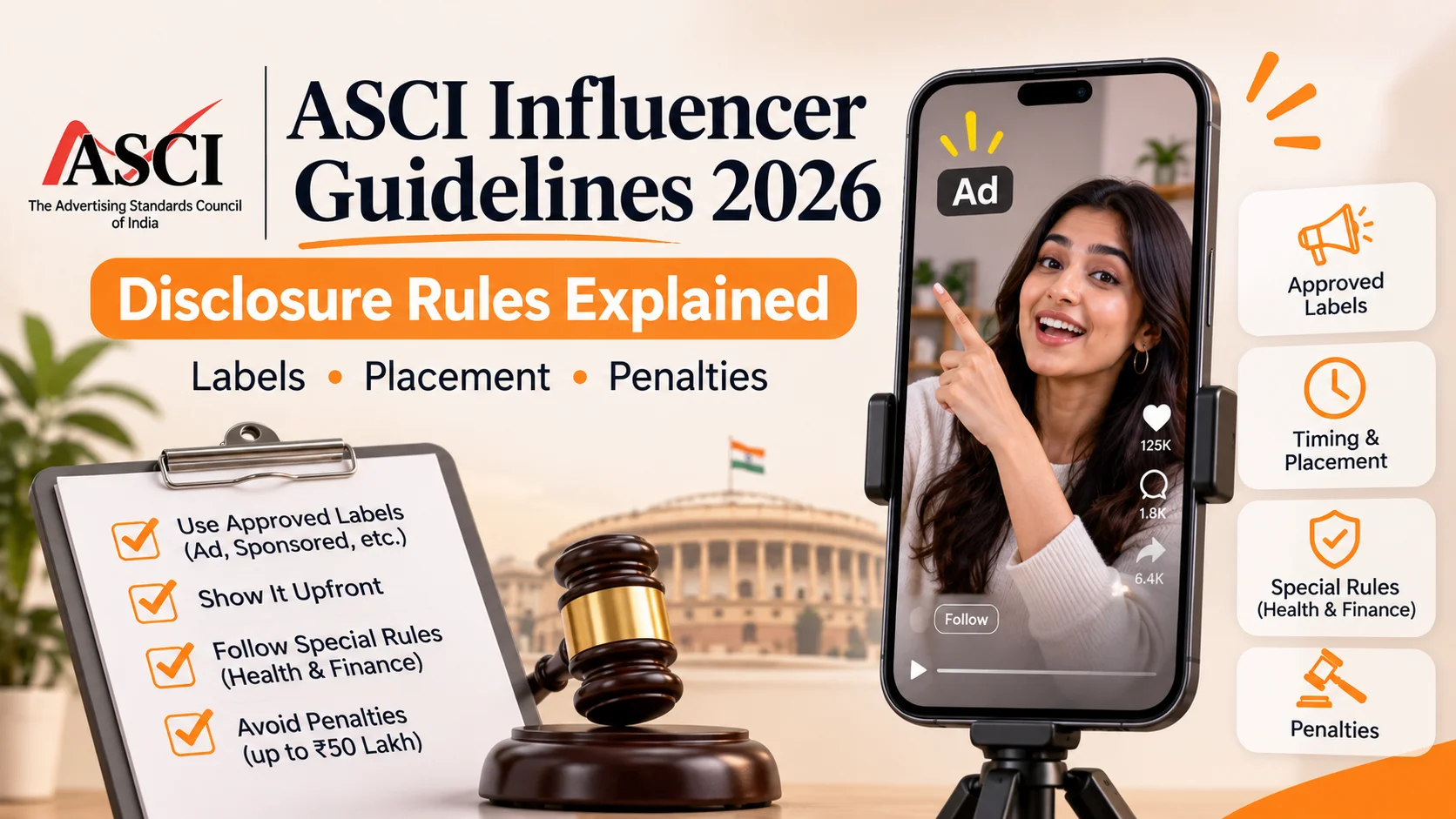
ASCI Influencer Guidelines Explained: Disclosures That Keep You Safe

ASCI's influencer guidelines require a clear label like "Ad" or "Collaboration" on any post with a material connection to a brand, shown upfront and for set durations in video. This guide covers the approved labels, placement rules, health and finance requirements, CCPA penalties of up to ₹50 lakh, and what brands must check.

Advora Editorial Team

Creator Economy

Micro-Influencers: Why They Outperform and How to Find Them

Micro influencers, creators with roughly 10,000 to 100,000 followers, usually get higher engagement than big creators and cost far less per post. This guide covers what the data says about micro vs macro influencers, 2026 rates in India, how to find and vet creators, how to brief them, and the disclosure rules you must follow.

Advora Editorial Team

Creator Economy

How Much YouTubers Earn in India: CPM by Niche

Indian YouTubers typically earn about ₹15 to ₹170 per 1,000 long-form views, and far less on Shorts, depending on niche and audience. This guide breaks down 2026 RPM and CPM by niche, what 1 lakh or 10 lakh views actually pay, the YouTube Partner Program rules changing in February 2027, tax basics and the income streams beyond ads.

Advora Editorial Team