Advora.media
Language

Opens Google Translate in a new tab. Automatic translations may contain errors.

AI Tools & Reviews/ Insights

Best AI Video Generators for Ads (Veo, Sora, Runway, Kling)

AI video generators can now produce ad-ready clips with sound in minutes, but the line-up changed sharply in 2026: OpenAI shut down the Sora app, Google expanded Veo inside Flow and Gemini, and Runway and Kling shipped new models. We compare what each tool is best at for ads, current pricing for Indian marketers, and where AI video still falls short.

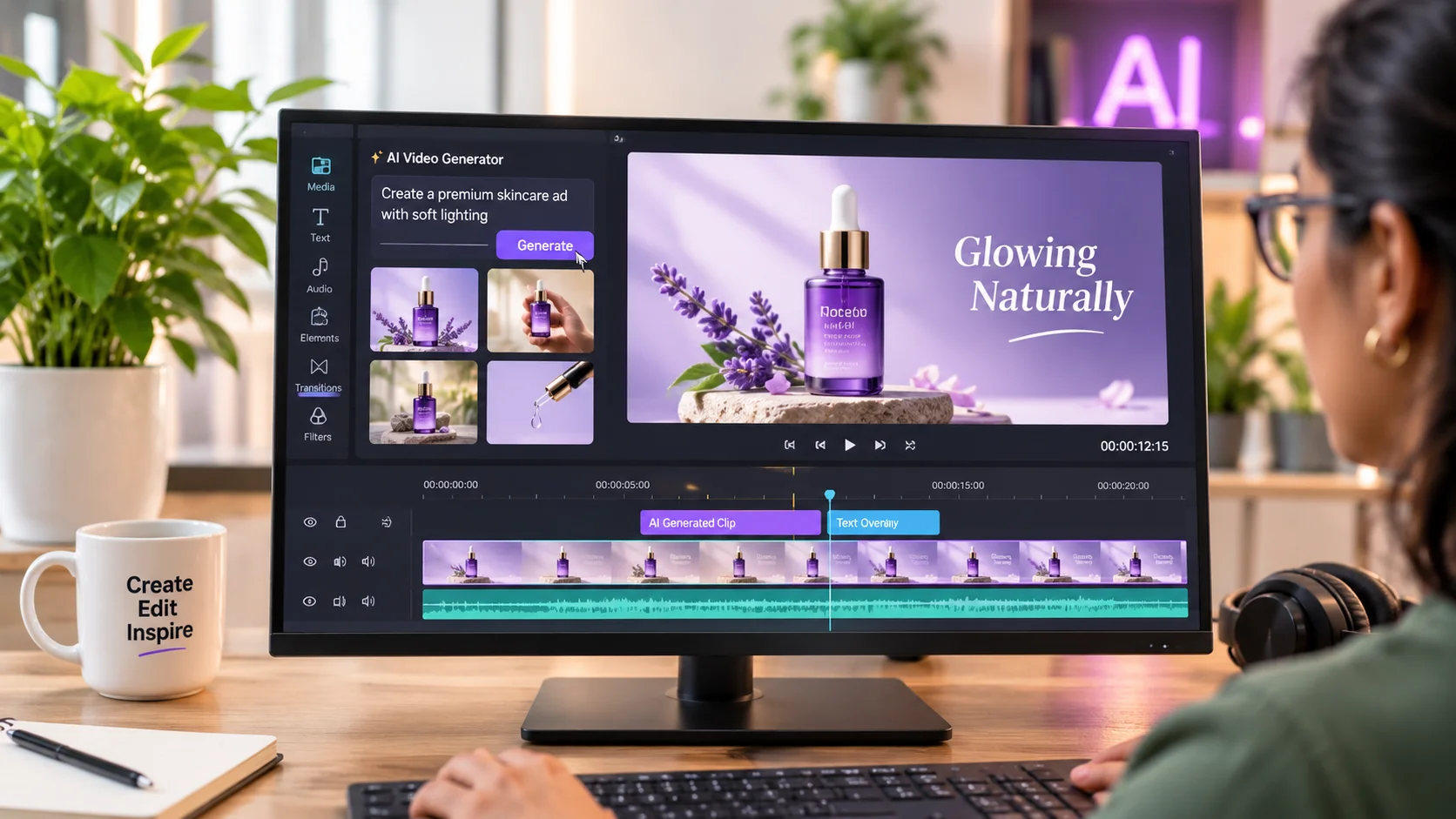
Video editing timeline on a monitor showing AI-generated product clips, illustrating AI video generators for ads

For ad video in 2026, Google Veo is the best all-round AI video generator for most marketers, Runway is strongest for editing and controlling footage, and Kling offers the most video per rupee for high-volume social testing. OpenAI’s Sora is no longer an option: OpenAI discontinued the Sora app on 26 April 2026. Indian marketers can try Veo through Google’s Flow tool, which gives 50 free credits a day, and through Google AI plans from ₹399 a month.

Key points

  • Sora is out. OpenAI shut down the Sora app in April 2026, and the remaining Sora 2 API was scheduled to sunset in September 2026.
  • Google Veo 3.1 is available in Flow, the Gemini app and Google’s APIs, with free daily credits and Indian plans priced in rupees.
  • Runway’s Gen-4.5 model and its editing tools suit teams that need to edit or restyle existing footage.
  • Kling 3.0, from China’s Kuaishou, offers native audio, 4K output and some of the lowest entry prices.
  • AI video is best for B-roll, product scenes, variations and concepts. Real people and real products still build the most trust.

Why are advertisers using AI video generators?

Video dominates paid social and YouTube, but it is the most expensive creative to produce. AI video generators let teams test new scenes, hooks and formats without booking a shoot for every idea.

Adoption is growing quickly. IAB research reported by eMarketer found generative AI will be involved in about 39% of video ad creative in 2026, up from 22% in 2024.

Platforms are pushing it too. Meta said nearly two million advertisers were using its video generation tool, and in beta tests advertisers who used it for most campaign ads saw average gains of 10% in click-through rate and 8% in conversion rate.

Editor’s note: We compared these tools on the jobs ad teams actually need: short product scenes, B-roll for Reels and Shorts, image-to-video from approved product photos, variations for testing, and editing existing footage. Cinematic short films and music videos are a different use case.

What should an ad team look for in an AI video generator?

  • Image-to-video: can it animate your real product photo accurately?
  • Consistency: does the product, logo and character stay the same across shots?
  • Audio: does it generate sound, voice or music, or will you add it later?
  • Length and format: can it make 9:16 vertical clips of the length you need?
  • Editing: can you change part of a clip without starting again?
  • Cost per usable clip: credits are spent on every attempt, including rejects.
  • Commercial terms and watermarks: can you use outputs in paid ads, and are they labelled?

What happened to Sora?

OpenAI launched Sora publicly in December 2024, including in India, and released Sora 2 with a social app in 2025. On 26 April 2026, OpenAI discontinued the Sora product.

A Sora 2 API remained for developers after the app closed, but it was scheduled to sunset on 24 September 2026. As of November 2026, there is no active Sora product for marketers to buy.

OpenAI has said it may share more about a possible future version, so check its announcements before planning around Sora. For now, treat Veo, Runway and Kling as the main options.

How good is Google Veo for ads?

Veo is Google’s AI video model. Its 3.1 version generates video with synchronised audio and adds finer editing in Flow, Google’s AI filmmaking tool. Google says Flow can chain clips for a minute or more while keeping continuity.

Google offers several Veo 3.1 tiers: a Lite model for cheap drafts, a Fast model and a full-quality model. Google has also added a newer Gemini Omni video model in Flow and the Gemini app, which supports 10-second clips and editing of uploaded videos.

Best for: product scenes, social B-roll, concept videos and quick ad variations, especially for teams already in Google Workspace.

Access and pricing: Flow gives 50 free credits a day without a subscription. Google AI Plus includes 200 Flow credits a month, AI Pro 1,000 and AI Ultra 10,000 or more. In India, AI Plus costs ₹399 a month, AI Pro ₹1,950 and AI Ultra ₹24,500.

For developers: the Gemini API and Vertex AI bill Veo per second of video, with prices varying by model tier, resolution and audio.

Watch for: credits are spent on every attempt, so budget for several generations per usable clip.

How good is Runway for ads?

Runway is a creative suite built around AI video. Its Gen-4.5 model is its current flagship for generation, while Gen-4 Turbo is cheaper and faster for drafts. In early 2026, Gen-4.5 ranked among the top models on the Artificial Analysis text-to-video leaderboard.

Runway’s strength is control. Aleph handles video-to-video editing, such as changing the setting or style of existing footage, and Act-Two drives a character using a recorded human performance.

Best for: editing real footage, restyling shots, creative agencies and teams that want more control over each clip.

Pricing: a free plan with 125 one-time credits and watermarked exports, then Standard, Pro and Max plans at about US12,US28 and US76peruseramonthbilledannually,orUS15, US35andUS95 billed monthly. Runway says commercial use is allowed on every tier.

For developers: the API charges about US0.05persecondforGen-4TurboandUS0.12 per second for Gen-4.5.

Watch for: Gen-4.5 uses credits quickly, so heavier production often needs the higher plans.

How good is Kling for ads?

Kling is the AI video generator from Kuaishou, one of China’s largest short-video platforms. Kling 3.0, released on 5 February 2026, added native audio, 4K output and generation up to 15 seconds, and quickly ranked at or near the top of video model leaderboards.

In June 2026, Kling added 3.0 Turbo for faster video with audio and upgraded its Omni model with 4K editing.

Best for: high-volume social testing, realistic motion and lower-cost experimentation.

Pricing: a free tier with daily credits, 720p output and a watermark, then paid plans from about US6.99amonthtomorethanUS127 a month, with roughly a third off on annual billing.

Watch for: Kling is a Chinese platform. Check its data, privacy and commercial terms against your clients’ policies before uploading unreleased products or brand assets.

How do Veo, Runway and Kling compare for ads?

Ease of use: Veo in Flow and the Gemini app is the easiest starting point for most marketers.

Free access: Veo offers free daily Flow credits, Kling offers a free tier with watermarks, and Runway gives one-time free credits.

Indian billing: Google’s plans are priced in rupees. Runway and Kling bill in US dollars.

Editing existing footage: Runway is strongest, with Veo’s newer models catching up.

Cost for volume: Kling and Veo’s Lite and Fast tiers are the cheapest for drafts and variations.

Audio: Veo 3.1 and Kling 3.0 generate audio natively. Runway’s workflow is stronger for visual editing.
Labelling: Google applies SynthID watermarks to its AI media, and platforms may require AI labels on realistic content.

Which AI video generator should you use for each ad type?

Product B-roll for Reels and Shorts: Veo or Kling, starting from your real product photo.

Festive and seasonal variations: Veo in Flow, generating new settings around approved product shots.

Editing existing brand footage: Runway, using Aleph to restyle or extend shots.

High-volume hook testing: Kling or Veo’s cheaper tiers, generating many short variations to test.

Talking-head and testimonial ads: real creators. AI avatars exist, but real people still earn more trust, which is why brands keep investing in UGC creators.

For still images, see our comparison of the best AI image generator for ads.

Can you use AI video in Meta and YouTube ads?

Yes, but follow each platform’s rules. Meta requires labels on ads with photorealistic AI-generated people, and policies continue to change.

Meta also offers its own AI video tools inside Ads Manager, including image animation, video expansion to new aspect ratios, AI music and translated voiceovers. These are often the quickest way to turn existing creative into video.

Claims still need to be true. Under ASCI’s code, an AI video must not show a product doing something it cannot do, or looking better than it does.

How much does AI video really cost?

Subscription price is only part of the cost. Every attempt uses credits, including clips you reject, so the real cost is the price per usable clip.

A practical rule is to expect several generations for every clip you approve, and more for complex scenes with people, hands or text. Draft on cheaper models, then finish on premium ones.

Add editing time too. Most ad-ready AI video still needs trimming, captions, branding and sound in an editor before it runs.

What are the limits of AI video for ads?

Product accuracy. AI can subtly change shapes, labels and colours. Always check the product against reality.

Text and logos. On-screen text and logos are often distorted. Add them in editing instead.

People and hands. Faces, hands and complex movement still produce errors, especially in longer clips.

Consistency across shots. Keeping the same person or product across a full ad remains difficult, though reference tools help.

Trust. Viewers increasingly spot AI video. Use it where it supports the message, not where authenticity matters most.

What to ignore in AI video generator advice

Ignore Sora guides written before April 2026. The product is discontinued.

Ignore leaderboard rankings as ad results. A top-ranked model may not improve your click-through rate.

Ignore “unlimited” claims. Unlimited plans often run at lower priority or use cheaper models.

Ignore cost per month without cost per usable clip. Rejected generations are part of the price.

Ignore fully AI ads for trust-heavy categories. Healthcare, finance and real estate buyers want real people and real places.

Advora editorial team insights

Working on real estate, healthcare, education and D2C campaigns, we see AI video work best as a layer on top of real assets: animating an approved product shot, adding seasonal backgrounds, or producing B-roll between real creator clips. Fully AI-generated ads still struggle to earn trust in high-consideration categories.

Our verdict for 2026 is that Veo is the best starting point for most Indian marketers, because of free daily credits, rupee pricing and its place inside Google’s tools. Runway suits teams editing existing footage, and Kling suits high-volume testing where cost per clip matters most.

The second insight is about workflow. The teams getting results generate many short drafts cheaply, pick the best few, then finish them in an editor with real branding, captions and sound.

FAQs

What is the best AI video generator for ads in 2026?
Google Veo is the best all-round choice for most marketers. Runway is strongest for editing footage, and Kling is good value for high-volume testing.

Is Sora still available?
No. OpenAI discontinued the Sora app on 26 April 2026, and the Sora 2 API was scheduled to sunset on 24 September 2026.

How much does Google Veo cost in India?
Flow offers 50 free credits a day. Google AI Plus costs ₹399 a month with 200 Flow credits, and AI Pro costs ₹1,950 with 1,000 credits.

Is there a free AI video generator?
Yes. Google Flow gives free daily credits for Veo, Kling has a free tier with watermarks, and Runway offers 125 one-time free credits.

Can AI-generated videos be used in Meta ads?
Yes, if they follow Meta’s policies, including labels for photorealistic AI-generated people, and make truthful claims.

What is text to video AI?
Tools that generate video clips from a written prompt. Most also support image-to-video, which animates an existing photo.


AI Tools & Reviews

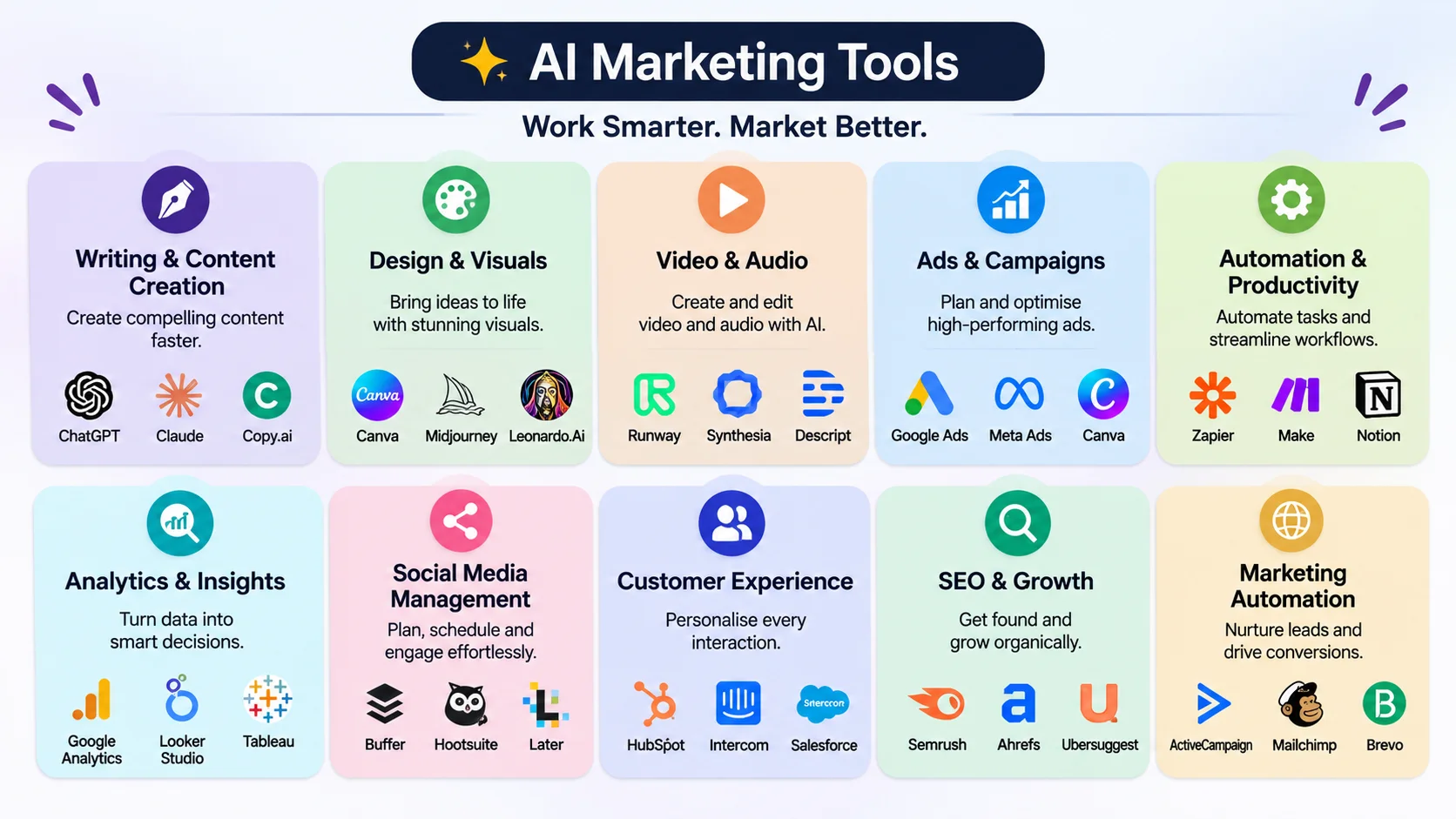
Best AI Marketing Tools 2026, Tested by Task

The best AI marketing tools in 2026 aren't one app; they're a stack matched to the task. This guide picks tools for writing, research, SEO, design, presentations, video, search ads, social ads, CRM and automation, with current plan prices, Indian pricing where it exists, and the limits each tool won't tell you upfront.

Advora Editorial Team

AI Tools & Reviews

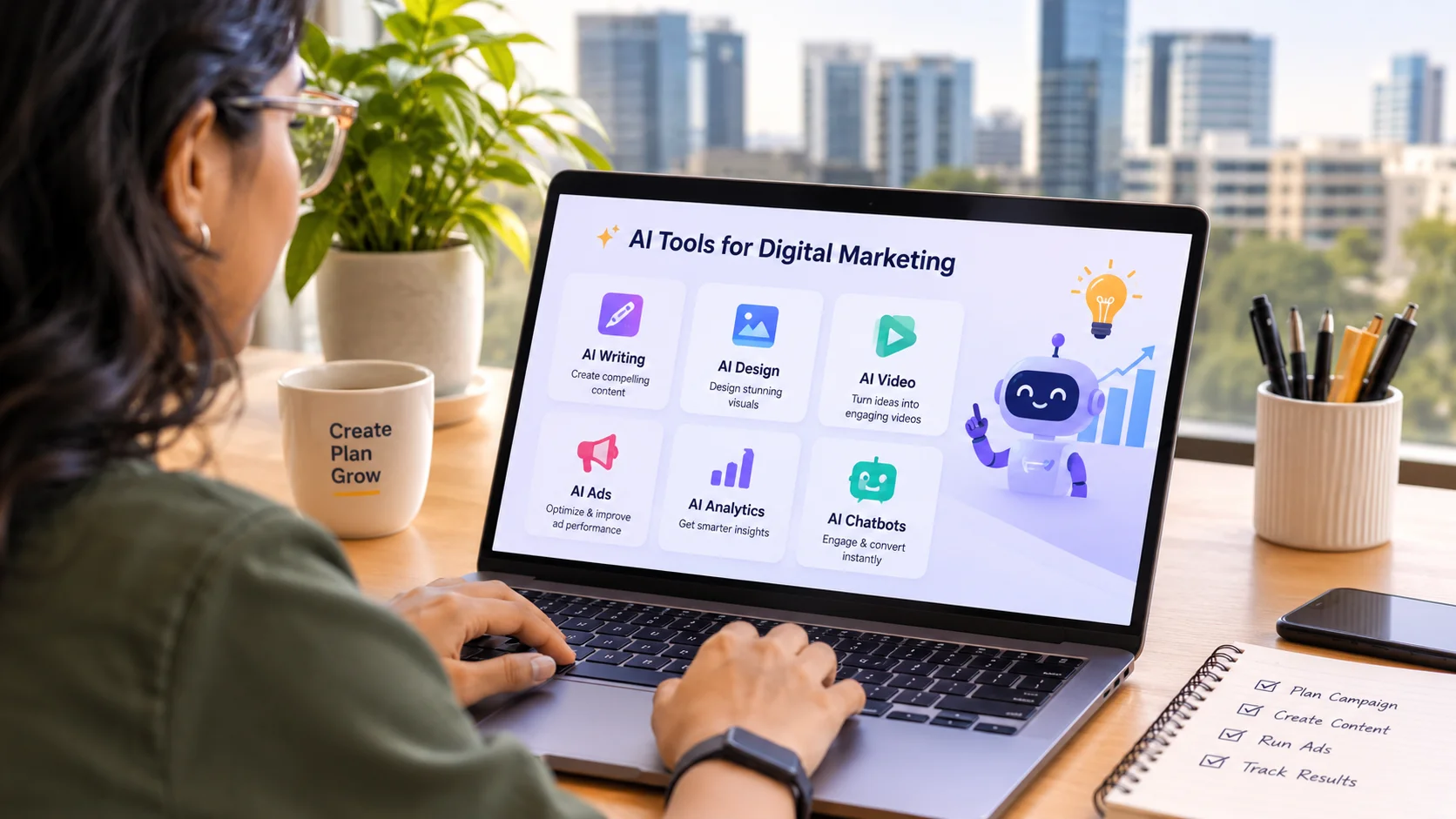
Best AI Tools for Digital Marketing in 2026

Almost every marketing team now uses AI, but few use it well. This guide sorts the best AI tools for digital marketing in 2026 by job: writing and research, design and images, video and voice, ad platforms and SEO. It covers what each tool is best at, current Indian pricing, free options, and the checks every team should run before AI work goes live.

Advora Editorial Team

AI Tools & Reviews

AI Image Generators for Ad Creative: Midjourney vs Ideogram vs Nano Banana

Midjourney, Ideogram and Google’s Nano Banana are the three AI image generators most marketers now use for ad creative. We compare them on what matters for ads: on-image text, product consistency, editing, speed, pricing, commercial terms and watermarks, with clear picks for mood visuals, text-heavy banners and AI product photography.

Advora Editorial Team