

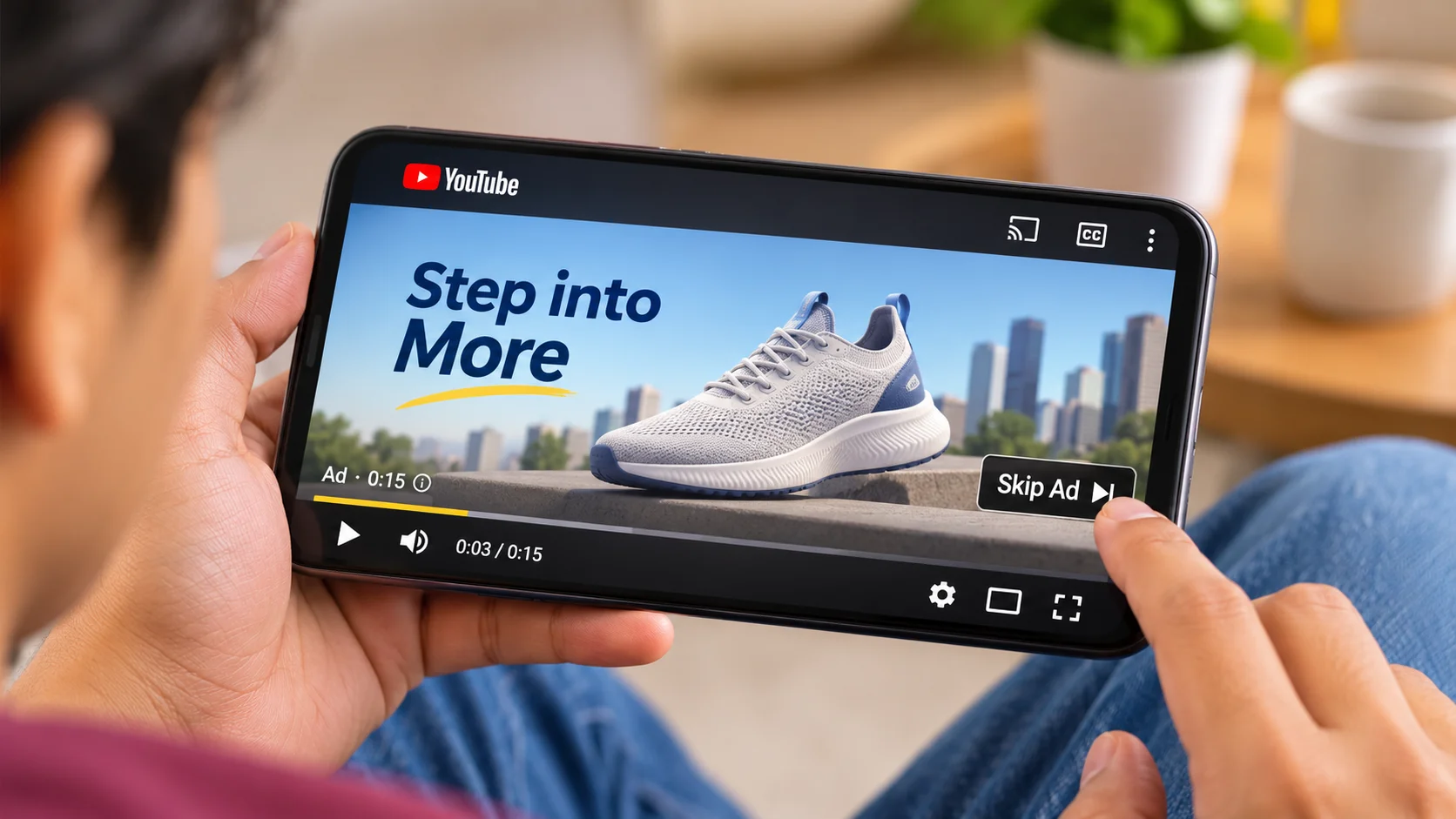
YouTube ads cost in India runs about ₹0.50 to ₹3 per view for skippable in-stream ads, ₹250 to ₹900 per 1,000 impressions for bumper and non-skippable ads, and around ₹350 to ₹450 CPM for Shorts in 2026. India has YouTube’s largest audience, roughly 49 crore users, and some of its lowest ad rates. This guide explains how each format is billed, what counts as a paid view, realistic budgets, and three worked campaigns in rupees.
Key points
- YouTube has no rate card. Ads are sold in an auction through Google Ads, and the price depends on format, audience, competition and season.
- Skippable in-stream ads are billed per view, and a view only counts after 30 seconds, the full ad if it is shorter, or a click. Skips before that are free.
- Bumper ads (6 seconds) and non-skippable ads (up to 15 seconds, plus a 30-second option on TV screens) are billed per 1,000 impressions, so you pay whether or not anyone engages.
- India’s YouTube CPM averages around $0.70 to $0.83, about ₹60 to ₹70, against more than $10 in many developed markets. Cheap reach makes YouTube one of the most efficient video buys in India.
- Google adds 18% GST on ad spend for Indian billing accounts, claimable as input credit by GST-registered businesses.
How is YouTube advertising priced?
YouTube ads are bought through Google Ads, which runs an auction every time an ad slot opens. Advertisers set a bidding strategy, a budget and targeting, and Google charges based on what it takes to win the impression or view for that audience. Two advertisers targeting the same people can pay very different prices.
There are three main billing models. Cost per view, or CPV, applies to skippable in-stream and some in-feed formats. Cost per thousand impressions, or CPM, applies to bumpers, non-skippable ads, Shorts reach campaigns and the Masthead. Cost per action applies when campaigns are optimised for conversions, leads or app installs.
Google defines a billable in-stream view as 30 seconds watched, the full ad if it is shorter than 30 seconds, or an interaction such as a click, whichever comes first. A viewer who skips at 5 seconds costs nothing on a CPV campaign. That rule is why skippable ads are often the cheapest way to reach an interested audience.
Editor’s note: We tell clients to write the first five seconds of a skippable YouTube ad as if it were the whole ad. Viewers who skip still see the brand, and you do not pay for them. Viewers who stay past 30 seconds are self-selected and genuinely interested, which is the best deal in Indian video advertising.
What does a YouTube ad cost per view in India?
Skippable in-stream ads in India typically cost ₹0.50 to ₹3 per view in 2026, with most campaigns landing between ₹1 and ₹2. Some third-party datasets report CPVs as low as ₹0.25 for broad audiences and well-performing creative.
Where a campaign falls in that range depends on three things. Broad audiences and entertainment content placements push CPV down. Narrow targeting, such as affluent professionals in one city or in-market audiences for cars or property, pushes it up. And creative quality matters, because ads that hold attention win auctions more cheaply.
In-feed video ads, which appear in YouTube search results and the home feed, are priced per view when a user clicks to watch. They cost more per view than in-stream, often around ₹5 to ₹8, but the viewer chose to watch, which makes them useful for longer explainer and demo videos.
What does YouTube CPM cost in India?
India’s average YouTube CPM is among the lowest in the world at around $0.70 to $0.83, or roughly ₹60 to ₹70, despite India having the largest YouTube audience. Format and targeting move it substantially.
By format, 2026 India benchmarks look like this:
- Bumper ads (6 seconds, non-skippable): about ₹250 to ₹400 CPM
- Non-skippable in-stream (up to 15 seconds): about ₹500 to ₹900 CPM
- Shorts ads: about ₹350 to ₹450 CPM
- Skippable in-stream, measured as CPM: about ₹40 to ₹150 CPM, since most impressions are skipped for free
Bumper and non-skippable formats cost more per thousand because every impression is a guaranteed full watch. They suit reach and recall campaigns with short, simple messages. Skippable ads cost less per impression and more per completed view, which suits longer stories and performance goals.
How much does a YouTube Masthead cost?
The Masthead is the large ad at the top of the YouTube home feed and the most expensive single placement on the platform. It is sold through Google sales teams, not self-serve, on a cost-per-hour, cost-per-day or CPM reservation basis.
In India, one media buying platform lists a Masthead rate of about ₹0.087 per impression, roughly ₹87 CPM, with a minimum billing of ₹12 lakh. National, full-day Mastheads on big launch or festive days are priced much higher and are usually booked weeks ahead.
The Masthead buys scale and salience in a single day, and works best for film releases, smartphone launches, sale events and festive campaigns. For most brands, the same budget delivers more targeted reach through bumper and in-stream campaigns.
How much does YouTube advertising cost on TV screens?
YouTube is now one of the most watched platforms on connected TVs in Indian homes, and Google sells CTV inventory through the same Google Ads campaigns. Advertisers can target TV screens specifically or let Google include them in a mix.
CTV inventory costs more than mobile. Global 2026 composites put YouTube CTV CPM about 40% above standard in-stream CPM, and a 30-second non-skippable format is available only on TV screens. In India, CTV is priced at a premium to mobile but well below JioHotstar’s IPL CTV rates of ₹600 CPM and above.
For brands that want television-style reach without TV channel prices, YouTube CTV is often the cheapest big-screen option. A ₹2 lakh to ₹5 lakh flight can deliver lakhs of households on the largest screen in the home, with the targeting of a digital campaign.
What affects YouTube ads cost in India?
Six factors explain most of the variation between campaigns.
Format. Bumper and non-skippable formats charge for every impression; skippable formats charge only for engaged views.
Audience. Broad demographic targeting is cheapest. In-market, custom intent and remarketing audiences cost more because more advertisers want them.
Placement and screen. Mobile is cheapest, CTV most expensive. Premium content packages and top creators’ channels cost more than run-of-network.
Creative. Ads with a strong hook, clear branding early and good retention win auctions at lower CPV.
Season. Diwali, the IPL and year-end sales push CPMs up as many advertisers chase the same audiences.
Bidding strategy. Target CPV, target CPM, maximise conversions and target CPA all trade off cost and outcome differently. Conversion-optimised campaigns usually cost more per view but less per result.


