The Complete Guide to Meta Ads in 2026
If your Meta ads stopped behaving the way they used to, you are not imagining it. Between late 2024 and late 2025, Meta quietly rebuilt the engine that decides which ad is shown to which person. The interface looks the same. The buttons are the same. The delivery system underneath is not. Advertisers who adapted are reporting meaningful efficiency gains; advertisers still running 2023 playbooks are paying more for worse leads and blaming "the algorithm."
This guide explains how Meta advertising actually works in 2026 and how to build campaigns for the system that exists today: the Andromeda delivery model, creative strategy under it, the signal infrastructure that separates cheap junk leads from qualified pipeline, campaign structure, budgets, measurement, and the mistakes we see most often in real accounts. It is written from hands-on campaign experience across industries, updated as the platform changes.
Part 1: Andromeda changed what targeting means
In December 2024, Meta published a low-key engineering post introducing Andromeda, a new AI retrieval system for ads. There was no announcement inside Ads Manager, no email to advertisers. By October 2025 the rollout was global across most objectives and placements.
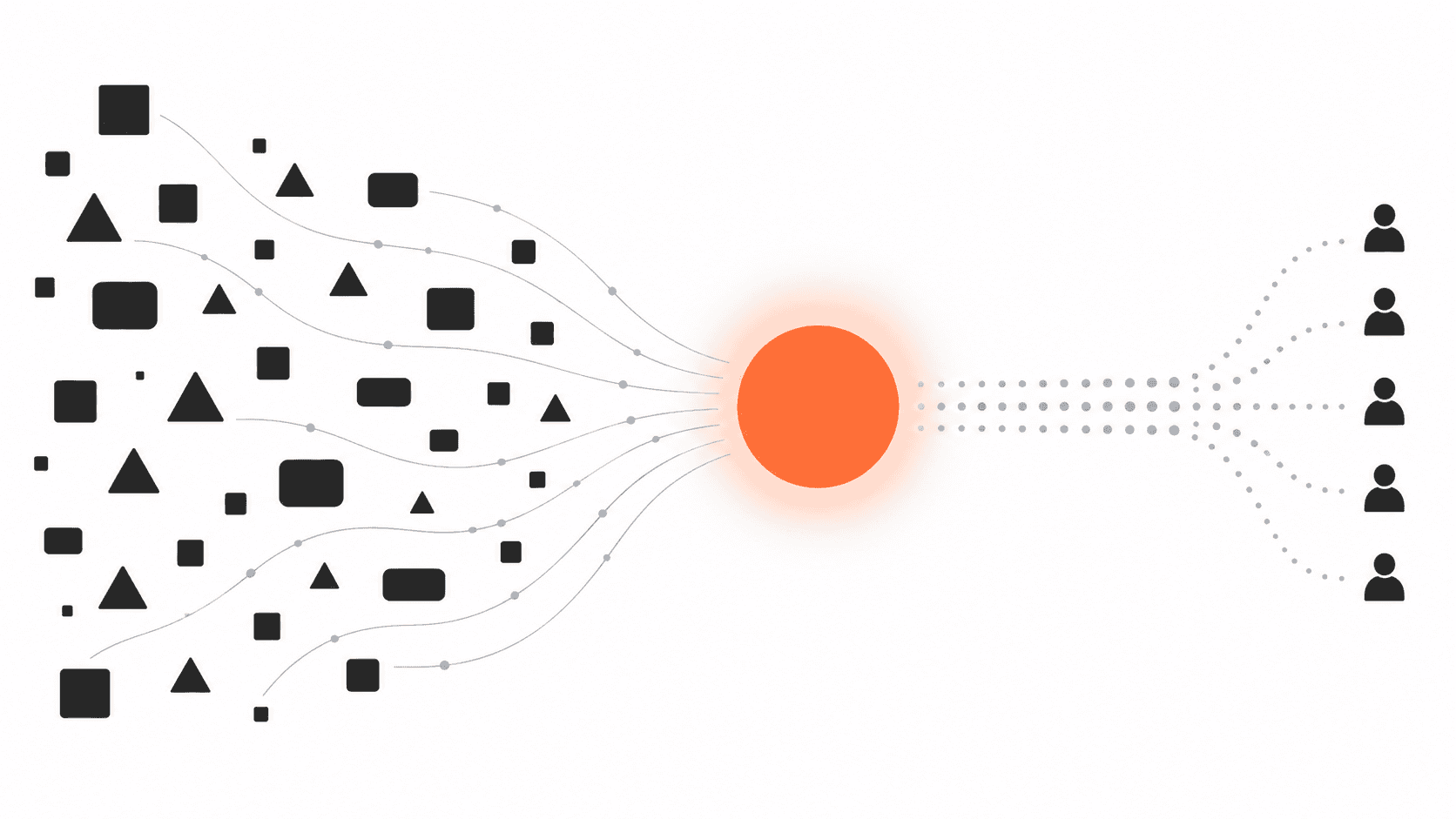
What it changed is fundamental. The old system started from your targeting settings: you defined an audience through interests, demographics and lookalikes, and your creatives competed inside that boundary. Andromeda works in reverse. It evaluates the creative first, predicts which individual users are most likely to respond to that specific ad based on behavioral signals, and serves it accordingly. Audience settings you enter are treated closer to suggestions than gates. In plain terms: your creative is your targeting now. The message, the hook, the format and the framing of an ad implicitly decide who sees it, because the system reads those elements to find matching people.
Why did Meta do this? Scale. Advantage+ campaigns, dynamic creative and AI-generated assets pushed advertisers to produce enormous creative volume, and the old rules-based system could not rank millions of ads per user efficiently. Andromeda is the retrieval engine built for that scale, and Meta claims it is several times more efficient at matching ads to people than the previous ranking models.
Editor's note: The simplest mental model we use internally: Meta in 2026 is a machine that performs exactly as well as what you feed it. Feed it diverse, honest creative and clean conversion signals, and it will find your buyers better than any manual targeting ever did. Feed it three lookalike ad sets and a form that counts every submission as a win, and it will happily deliver you a high volume of exactly the wrong people. Most "the algorithm broke" complaints we hear are, on inspection, input problems, not algorithm problems.
The rest of this guide is organized around the two inputs that now decide everything: the creative the system reads, and the signals it learns from.
Part 2: Creative strategy when creative is the targeting
Since every ad now self-selects its audience through what it says and shows, creative planning has become audience planning. Four rules follow from that.
1. Diversity of angles, not variations of one winner. The old playbook took a winning image and tested twenty headlines on it. Under Andromeda that tactic works against you: near-identical variations read as one creative to the system, so they reach the same slice of people and fatigue together. What the system rewards is genuinely different angles. For one product that might be: a price-led offer ad, a problem-agitation video, a customer story, a founder explainer, and a feature demo. Each angle recruits a different kind of buyer. A practical build is 2 to 3 creatives per angle across formats, giving the system 12 to 18 truly distinct assets to work with. Watch for "fake diversity": recolored statics and re-hooked versions of the same video do not count.
2. Volume must match budget. More creatives is not automatically better. When creative supply outweighs budget, learning slows and delivery fragments; the system cannot gather enough data per asset to learn anything. A small account copying the 20-creative velocity of global brands starves every asset. Scale creative count with spend: smaller budgets, fewer but sharper angles.
3. Every stage of the funnel needs its own creative. Because creative selects audience, top-of-funnel awareness creative, middle consideration creative and bottom conversion creative literally reach different people. An account running only "book now" ads has, by definition, no top of funnel. This is the mechanism behind full-funnel structure, not a theoretical framework.
4. Refresh on evidence, not on schedule. With creative-level reporting, retire assets when frequency climbs and results decay, and replace them with a new angle rather than a re-skin. Structured refresh beats random rotation: keep proven performers running, feed new exploration alongside them, and never blend testing and scaling in one campaign.
Editor's note: The most consistent pattern we see across accounts: when performance stalls, the instinct is to change settings, budgets or bids. In the Andromeda era the honest first question is almost always "do we have enough genuinely different creative angles live?" If more than half your active ads are the same idea in different clothes, that is the fix. Everything else is rearranging furniture.
Part 3: The signal layer, where lead quality is actually decided
Creative decides who sees your ads. Signals decide what the system optimizes toward. This is the layer most advertisers underinvest in, and it is where the difference between "lots of cheap leads" and "leads that become revenue" is made.
The problem with default lead campaigns. A standard lead campaign optimizes for form submissions. Meta will dutifully find the people most likely to submit forms, and a meaningful share of them are serial form-fillers, curiosity clicks and unqualified prospects. The system is not misbehaving; it is optimizing for exactly what you asked. If a submission is your success event, submissions are what you will get.
The fix is closing the loop. Three components, in order of implementation:
- Conversions API (CAPI) alongside the Pixel. The browser pixel alone misses a growing share of events to tracking prevention and app environments. CAPI sends events server-side, directly from your systems to Meta, restoring signal completeness and reliability. In 2026 this is baseline infrastructure, not an advanced option.
- CRM integration. Connect your CRM (or lead management sheet, at minimum) so lead outcomes exist somewhere structured: contacted, qualified, site visit booked, sale. Without recorded outcomes there is nothing to send back.
- Qualified-signal feedback and conversion-based optimization. Pass the downstream events back to Meta through CAPI: mark which leads became qualified, which converted. Then optimize campaigns toward those deeper events, using conversion leads style optimization rather than raw submissions. The system now learns what a good lead looks like for your business specifically, and goes to find more of those people.
Editor's note: This loop is, in our experience, the single highest-leverage change available to lead generation advertisers in 2026, and the pattern repeats across every industry we work in. When an account moves from optimizing on form fills to optimizing on qualified signals fed back through the Conversions API, the reported cost per lead usually rises, and teams panic at exactly that moment. Hold the line. What follows, consistently, is that cost per qualified lead falls and sales teams stop complaining about junk. You are paying slightly more per lead for dramatically more of the leads that matter. The advertisers who never make this switch are competing for the bottom of the lead pool while their competitors quietly train Meta on revenue.
Practical notes on the loop. Volume matters: deeper events fire less often, so if your qualified event is too rare, optimize one step up the chain (qualified conversation rather than closed sale) until volume supports learning. Feedback speed matters: send qualification events back within hours or days, not month-end. And honesty matters: qualification criteria must be consistent, because inconsistent labeling trains the system on noise.
Part 4: Structure, budgets and the learning phase
Andromeda rewards concentration and punishes fragmentation. Over-segmentation now fights the algorithm: every extra ad set splits data into smaller pools and slows learning everywhere.