
Advora.media
Language

Opens Google Translate in a new tab. Automatic translations may contain errors.

Offline & OOH/ Insights

Newspaper Advertising Rates in India 2026

What does a newspaper ad cost in India in 2026? Classified text ads can start under ₹100 a line, while a quarter-page display in a big regional daily can cost several lakh. This guide covers rates for the Times of India, Eenadu and other dailies, how per sq cm pricing works, standard ad sizes, 5% GST, circulation data and how to book.

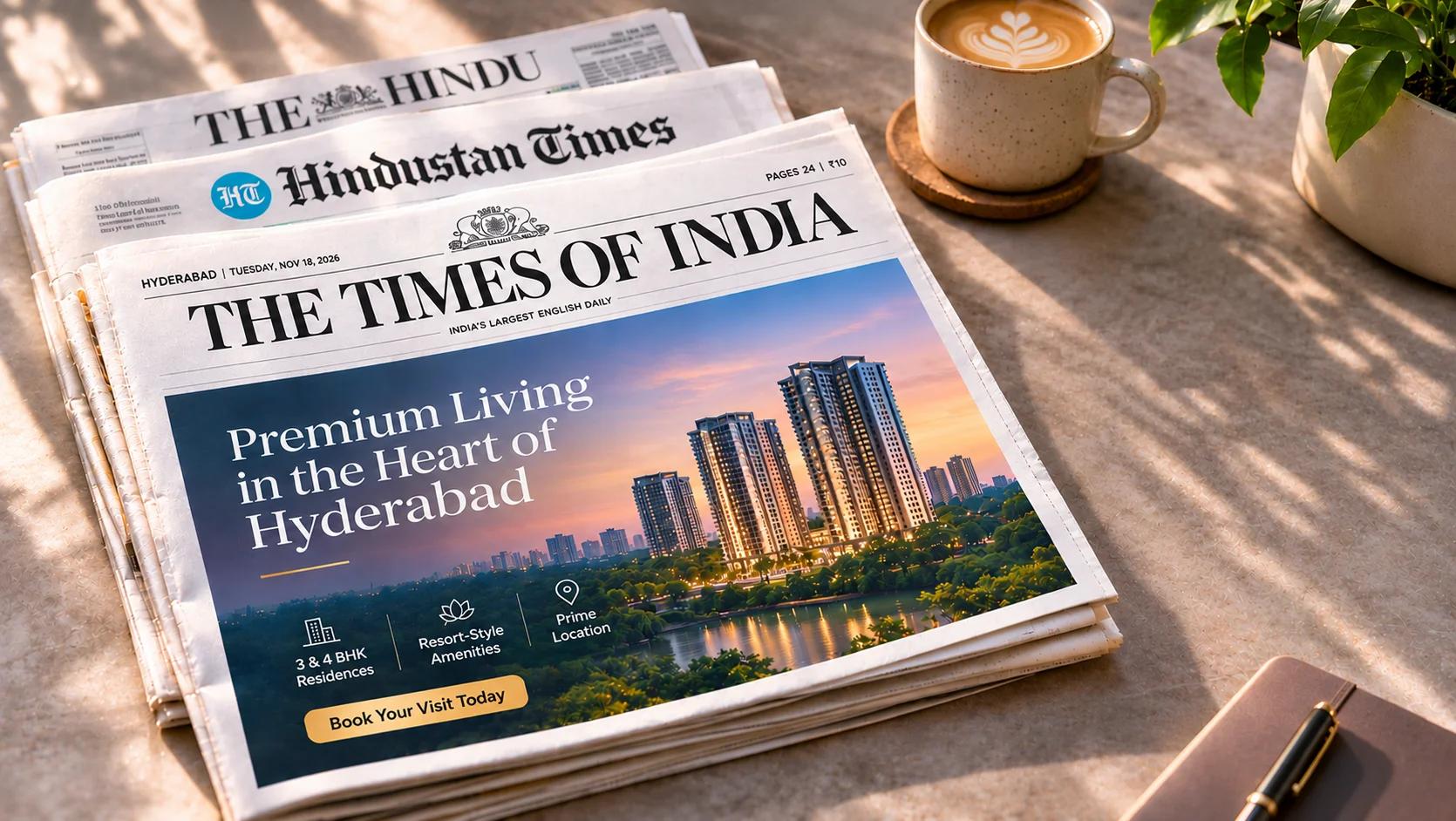
Folded morning newspapers stacked on a table with a display advertisement visible, illustrating newspaper advertising rates in India

Newspaper advertising rates in India depend on the paper, edition, ad type, size and position. Classified text ads are priced per line or word and can start at about ₹70 to ₹140 a line in a metro edition, while display ads are priced per square centimetre, from a few hundred rupees per sq cm in smaller editions to over ₹2,000 per sq cm for premium placements. A quarter-page display in a large regional edition such as Eenadu Hyderabad lists at about ₹5.7 lakh, and print space attracts 5% GST.

Key points

  • Display ads are priced per sq cm (width × height); classified text ads per line or word.
  • Rates vary widely by edition, day, page and colour. Front page and jacket positions cost the most.
  • Media-buying platforms quote different rates for the same paper, so always get a written quote for your exact size and date.
  • Print ad spend in India grew 3% to ₹20,866 crore in 2025, about 13% of total ad spend.
  • GST on newspaper ad space is 5%; agency services are charged at 18%.

How big is newspaper advertising in India?

Print remains a major medium. The Pitch Madison Advertising Report 2026 puts India’s print ad spend at ₹20,866 crore in 2025, up 3% from ₹20,272 crore, and forecasts ₹21,388 crore for 2026.

Its share is shrinking, though. Print accounted for about 13% of total ad spend in 2025 on the report’s expanded definition, while digital took about 60%.

Circulation is holding up better than many expect. ABC data for January to June 2026 shows the Times of India at 16,58,970 average qualifying copies, up 1.13% year on year, and Dainik Bhaskar Hindi at 30,23,109.

Editor’s note: Newspapers rarely publish full rate cards, so most rates in this guide come from media-buying platforms such as Riyo Advertising, The Media Ant and SmartAds. These platforms quote different rates for the same paper, depending on ad type, edition and offer. Use them as planning ranges, not final prices.

How are newspaper ads priced?

Classified text ads are plain text in the classifieds section, priced per line or per word, usually with a minimum of three to five lines.

Classified display ads sit in the classifieds section but can include a logo, border or image. They are priced per sq cm.

Display ads appear in the main news pages or supplements and are priced per sq cm. Position, colour and page change the rate.

Fixed-size and premium formats include quarter pages, half pages, full pages, front-page “pointer” ads and jackets that wrap the paper. These are often sold as packages.

How to calculate a display ad: width (cm) × height (cm) × rate per sq cm. An 8 × 12 cm ad at ₹800 per sq cm costs 96 × ₹800 = ₹76,800, plus 5% GST.

What are standard newspaper ad sizes?

The Media Ant lists these common formats for broadsheet dailies:

  • Pointer: about 4 × 5 cm (20 sq cm), usually on the front page
  • Quarter page: about 16 × 25 cm (400 sq cm)
  • Half page: about 32.9 × 25 cm (825 sq cm)
  • Full page: about 1,716 sq cm

Many papers set a minimum of about 20 sq cm for custom ads on inside pages and about 240 sq cm on the front page. Sizes vary slightly by paper, so confirm the exact grid before designing.

What are Times of India ad rates in 2026?

The Times of India is India’s largest English daily by circulation. Riyo Advertising’s 2026 guide lists these starting rates:

Classified and display:

  • Classified display: from about ₹420 per sq cm
  • Semi-display: from about ₹500 per sq cm
  • Run-of-paper display: from about ₹800 per sq cm
  • Front page and premium positions: from about ₹2,500 per sq cm
  • Jacket ads: from about ₹99.7 lakh per insert

Run-of-paper display by city (per sq cm):

  • Mumbai: about ₹1,500 to ₹2,200
  • Delhi: about ₹1,400 to ₹2,000
  • Bengaluru: about ₹900 to ₹1,400

Classified text, Delhi edition: from about ₹70 per line, with matrimonial and obituary ads around ₹90 to ₹140 per line and recruitment and property around ₹85 to ₹135.

Property display (TOI): quarter-page displays around ₹70,000 to ₹1,50,000 and half pages around ₹1,50,000 to ₹3,00,000, depending on edition.

Mumbai and Delhi are generally the most expensive TOI editions, with other metros and tier-2 cities lower. Supplements such as Times Ascent for jobs and Times Property also have their own rates.

What are Eenadu ad rates in 2026?

Eenadu is the leading Telugu daily across Andhra Pradesh and Telangana. Rates vary sharply between editions.

The Media Ant lists these rack and offer rates:

  • Hyderabad edition: custom display rack rate about ₹2,048 per sq cm, with minimum billing of ₹36,860
  • Hyderabad city: quarter page about ₹5,73,563 and half page about ₹9,55,938 per insert
  • Telangana (all editions): custom display base about ₹6,379 per sq cm
  • Andhra Pradesh (all editions): custom display base about ₹6,047 per sq cm, quarter page about ₹24,18,800
  • Guntur edition: custom display about ₹560 per sq cm
  • Hyderabad jacket (back side): about ₹80.7 lakh per insert

SmartAds quotes much lower per-sq-cm figures, from about ₹180 in smaller editions to ₹850 in Hyderabad, which may reflect classified display or negotiated rates. The gap shows why a written quote matters.

Why state-wide rates are so high: a state package runs your ad across every edition in Telangana or Andhra Pradesh, so you pay for far more copies than a single city edition.

What do other Telugu newspapers charge?

Hyderabad and Andhra advertisers often compare Eenadu with other Telugu and English dailies. SmartAds’ 2026 guides list:

  • Sakshi: display about ₹450 to ₹650 per sq cm on inside pages, and ₹800 to ₹1,200 for front or back page placements in major editions
  • Telangana Today (Hyderabad): classified text about ₹200 to ₹350 per line; classified display about ₹300 to ₹600 per sq cm
  • Andhra Prabha: classified display about ₹200 to ₹350 per sq cm for black and white; Hyderabad display about ₹350 to ₹600 per sq cm for inside colour

Regional papers often deliver lower cost per reader in their home markets than national English dailies.

What do other major newspapers charge?

Riyo Advertising lists these indicative 2026 rates for legal and property notices:

  • Hindustan Times (Delhi/Mumbai): classified display about ₹320 to ₹400 per sq cm
  • Maharashtra Times: classified display about ₹180 to ₹240 per sq cm
  • Dainik Bhaskar: half-page displays about ₹1.5 lakh to ₹4 lakh or more

Hindi dailies such as Dainik Bhaskar, Dainik Jagran and Amar Ujala dominate circulation in North and Central India, which makes them strong choices for regional campaigns.

Which newspapers have the highest circulation?

ABC-certified average qualifying sales for January to June 2026 include:

  • Dainik Bhaskar Group: 35,26,989 copies across Hindi, Gujarati and Marathi titles
  • Dainik Bhaskar (Hindi): 30,23,109 copies
  • The Times of India: 16,58,970 copies
  • Malayala Manorama: 14,88,495 copies, down 6.42%
  • Rajasthan Patrika: 12,12,209 copies
  • Hindustan Times: 6,32,321 copies

Readership is higher than circulation because each copy is often read by several people. Use circulation in your target edition, not national totals, to judge value.

What makes newspaper ads more expensive?

Edition and reach. Metro and multi-edition packages cost more than single local editions.

Position. Front page, back page, page 3 and jacket positions carry large premiums.

Colour. Colour ads usually cost more than black and white.

Day. Weekend editions and special supplements can carry higher rates.

Category. Some categories, such as property, recruitment and obituaries, have their own rate cards.

Timing. Festival seasons and election periods bring heavy demand for premium positions.

How much GST applies to newspaper ads?

GST on the sale of advertising space in print media is 5%. A ₹1,00,000 display ad costs ₹1,05,000 with GST.

If an agency charges a separate fee for creative or planning, that service attracts 18% GST. See our guide to agency pricing in India for typical fees.

How do you book a newspaper ad?

  1. Choose the newspaper and edition based on where your customers live.
  2. Pick the ad type: classified text, classified display or display.
  3. Decide the size, position and date. Ask about minimum sizes and premium position availability.
  4. Get a written quote from the publisher’s ad desk or an authorised agency, including GST.
  5. Submit artwork in the required format. The Media Ant, for example, asks for print-ready PDF files at 300 dpi.
  6. Confirm and pay before the booking deadline, usually one to three days before publication for classifieds and longer for premium positions.
  7. Check the published ad and keep a copy for your records.

For legal and statutory notices, check which newspapers and editions the relevant authority accepts before booking.

Is newspaper advertising worth it in 2026?

Newspapers still work well for certain goals:

  • Real estate launches, where a full-page ad signals scale and credibility
  • Local and regional campaigns, especially in Hindi and regional-language markets
  • Recruitment, legal notices and public announcements
  • Older and higher-income audiences who still read print daily
  • Trust-building, since print is often perceived as more credible

Combine print with digital where possible. A QR code or WhatsApp number in the ad makes response measurable. For costs across all channels, see our advertising cost in India hub.

What to ignore when buying newspaper ads

Ignore rack rates as final prices. Platforms and publishers often offer packages and discounts.

Ignore national circulation figures. What matters is circulation in the edition you book.

Ignore cheap rates without checking the format. A low per-sq-cm rate may apply only to classifieds, not the main paper.

Ignore front-page premiums for small budgets. Repeated inside-page ads often build more awareness than one expensive front-page slot.

Ignore ads without a response mechanism. Add a phone number, QR code or offer code to measure results.

Advora editorial team insights

From our work on real estate, healthcare and education campaigns in Hyderabad and Andhra Pradesh, Telugu dailies often deliver better local response than English papers for mass-market launches. English dailies such as the Times of India and Deccan Chronicle work better for premium and corporate audiences.

Our verdict is to plan newspaper ads edition by edition, not paper by paper. A single well-chosen city edition with a strong offer usually beats a costly state-wide package with a generic message.

The second insight is about quotes. We regularly see the same ad priced very differently by different agents, so get two or three written quotes for the exact size, edition, date and position before booking.

FAQs

How much does a newspaper ad cost in India?
Classified text ads can start around ₹70 to ₹140 per line in metro editions. Display ads range from a few hundred to over ₹2,000 per sq cm, and a quarter page can cost from tens of thousands to several lakh rupees.

What are Times of India ad rates per sq cm?
Riyo Advertising lists TOI classified display from about ₹420 per sq cm and run-of-paper display from about ₹800, with Mumbai main-edition ROP around ₹1,500 to ₹2,200.

What are Eenadu ad rates?
The Media Ant lists Eenadu Hyderabad custom display at about ₹2,048 per sq cm rack rate, with a quarter page at about ₹5.7 lakh. State-wide packages cost much more.

How is a newspaper ad cost calculated?
Multiply width × height in cm by the rate per sq cm, then add 5% GST.

What GST applies to newspaper advertising?
5% on print ad space and 18% on agency services.

How do I book a newspaper ad?
Choose the paper and edition, ad type, size and date, get a written quote, submit print-ready artwork and pay before the deadline.


Offline & OOH

Programmatic DOOH Moves Into the Omnichannel Buy, Panel Says

At the WOO Central European Forum, Broadsign and Google DV360 leaders argued that programmatic DOOH is shifting from a standalone awareness buy to part of the main omnichannel workflow. Here's what that changes for buyers.

Advora Editorial Team