

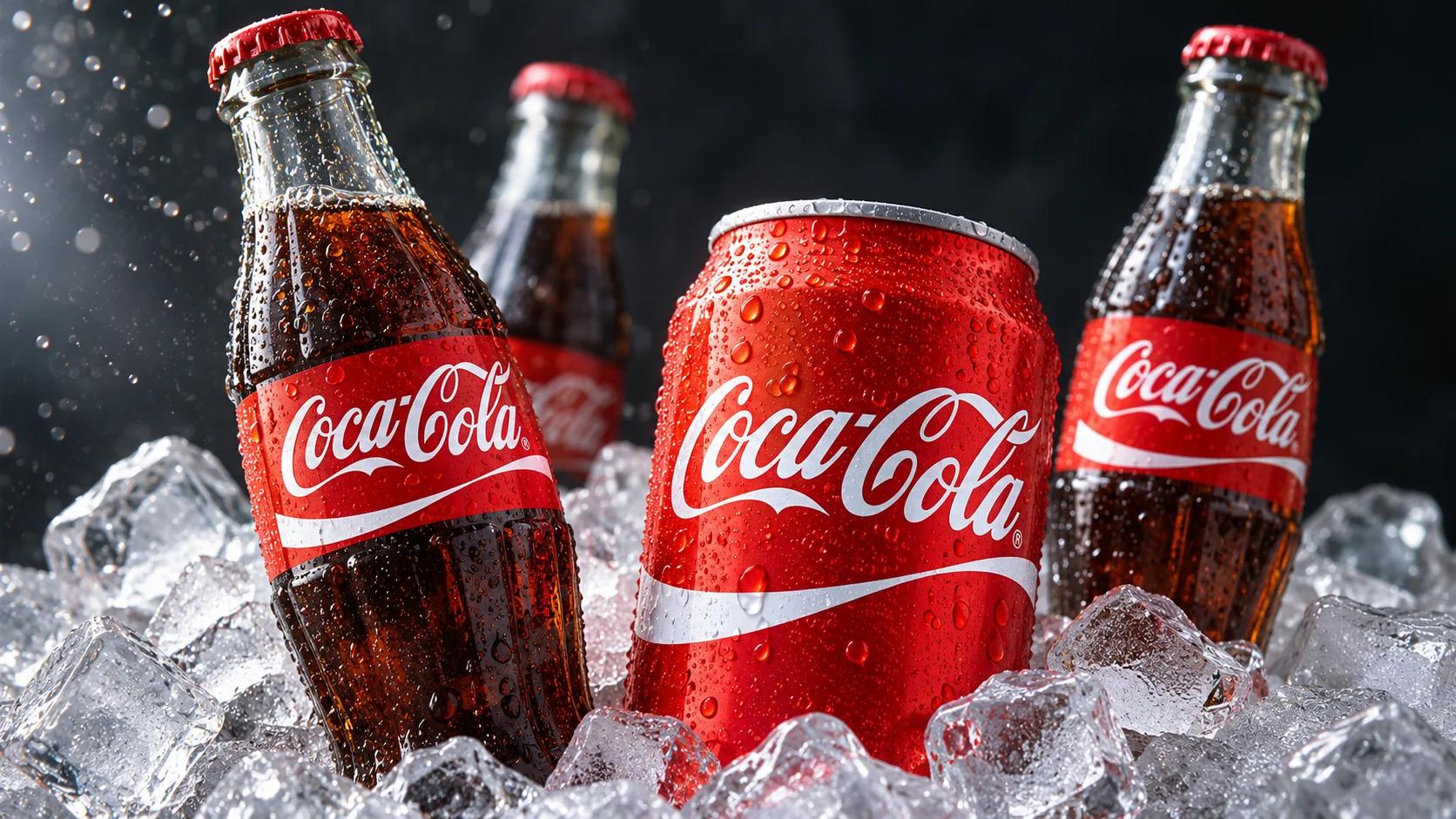
Coca-Cola’s marketing strategy is built on emotion, ubiquity and consistency. It positions Coke as a symbol of happiness and togetherness rather than a soft drink, makes sure it is available almost everywhere through a franchise bottling system, and balances affordable small packs with premium options. The approach is working again in 2026: global unit case volume grew 5% in the third quarter, led by India, China, Mexico and Brazil, helped by a global FIFA World Cup campaign.
Key points
- Coca-Cola sells feelings, such as happiness, refreshment and togetherness, more than taste or ingredients.
- Its bottling system puts the product within reach of most consumers, which is a marketing advantage as much as a logistics one.
- Price and pack strategy balance affordability with premiumisation, market by market.
- Long-running platforms such as Share a Coke and the FIFA World Cup keep the brand culturally present.
- In India, Thums Up, not Coke, is the company’s largest brand by sales value, and Reliance’s Campa Cola is a growing challenger.
How big is Coca-Cola in 2026?
The Coca-Cola Company reported net revenues of $47.9 billion for 2025, up 2%, with organic revenue growth of 5%. Global unit case volume was flat for the year, while Coca-Cola Zero Sugar grew 14%.
2026 has been stronger. In the third quarter, net revenues rose 7% to $13.4 billion and global unit case volume grew 5%, led by India, China, Mexico and Brazil. Coca-Cola Zero Sugar grew 16%.
Editor’s note: Henrique Braun became CEO on 31 March 2026, succeeding James Quincey. Most of the strategy described here was built over decades, but the 2026 results are the first under Braun.
How is Coca-Cola positioned?
Coca-Cola positions itself as a brand of happiness, refreshment and shared moments. Its advertising rarely talks about the drink’s ingredients; it shows people celebrating, connecting and enjoying small moments.
Three ideas run through the brand:
- Happiness and optimism: Coke as a small, everyday pleasure.
- Togetherness: families, friends and fans sharing a moment.
- Timelessness: the same logo, bottle shape and taste for generations.
That consistency is the point. A product that barely changes needs a brand that feels both familiar and fresh.
How does Coca-Cola’s marketing mix work?
Product: one icon, a broad portfolio
Trademark Coca-Cola, including Coke Zero Sugar and Diet Coke, is the core. Around it sits a large portfolio of sparkling drinks, juices, water, sports drinks, coffee and tea, including Sprite, Fanta, Powerade and Minute Maid.
The portfolio lets Coca-Cola follow changing tastes without changing Coke itself. Zero-sugar variants have become one of its fastest-growing lines.
Price: affordability and premiumisation
Coca-Cola manages price through packs as much as price points. Small, cheap packs bring in new and price-sensitive buyers, while larger and premium packs raise value.
CEO Braun has described this as revenue growth management that balances affordability and premiumisation depending on market conditions. In India, for example, Coca-Cola and PepsiCo launched ₹10 packs of no-sugar drinks, including Thums Up X Force and Coke Zero, to compete with Campa.
Place: the bottling system
Coca-Cola mostly makes concentrate and markets the brands, while bottling partners produce, distribute and sell drinks locally. This franchise system puts Coke in supermarkets, kirana stores, restaurants, cinemas and vending machines.
Availability is a marketing tool. A brand people can buy everywhere, chilled, at the right price, wins the impulse purchase.
Promotion: big platforms, local execution
Coca-Cola invests in long-running global platforms, such as football, festive seasons and Share a Coke, and lets local teams adapt them. It pairs mass advertising with retail visibility, coolers, sponsorships and digital activations.
What are Coca-Cola’s most famous campaigns?
Santa Claus (1931 onwards)
Coca-Cola’s Christmas ads, illustrated by Haddon Sundblom from 1931, helped popularise the warm, red-suited image of Santa that many people recognise today.
They tied Coke to the festive season, which the brand still owns in many markets.
Hilltop (1971)
“I’d Like to Buy the World a Coke” showed young people from around the world singing together on a hillside. It made Coke a symbol of global harmony and remains one of the most famous ads ever made.
New Coke (1985)
Coca-Cola changed its formula in 1985 and faced a consumer backlash. It brought back the original as “Coca-Cola Classic” within months.
The lesson has become marketing folklore: Coke’s value lies in emotional attachment, not just taste tests.
Holidays Are Coming (1995 onwards)
The illuminated Coca-Cola trucks, first seen in 1995, became a seasonal signal in many countries. For many viewers, the ad marks the start of the festive season.
Share a Coke (2011 onwards)
Share a Coke replaced the logo on bottles with popular first names, starting in Australia in 2011, then rolling out globally. People hunted for their own names and those of friends, and shared photos online.
It turned packaging into personalised, shareable content. Coca-Cola brought Share a Coke back in 2025 with new digital features.
Real Magic (2021 onwards)
Coca-Cola introduced “Real Magic” as its global brand platform in 2021, built around shared moments, gaming, music and youth culture. It has since been extended into digital and AI-assisted creative.
How did Coca-Cola market the 2026 FIFA World Cup?
Coca-Cola has a long history with football, and the 2026 FIFA World Cup in North America was its biggest marketing moment of the year.
The company described its World Cup work as a single, connected campaign across more than 180 markets, combining films, retail promotions, connected packaging and digital experiences. In North America, it partnered with Panini on World Cup sticker bottles.
Coca-Cola said the campaign contributed to the 5% volume growth of Trademark Coca-Cola and the 8% growth of Powerade in the second quarter. It did not disclose how much of that growth came from the campaign itself.
How is Coca-Cola using AI in marketing?
Coca-Cola has been one of the most visible big brands experimenting with generative AI in advertising, including AI-assisted holiday ads. Some consumers criticised those AI-driven holiday campaigns, according to MediaPost.
The lesson is mixed. AI can speed up production and personalisation, but beloved brand moments carry high emotional expectations, and audiences notice when something feels less human.


